
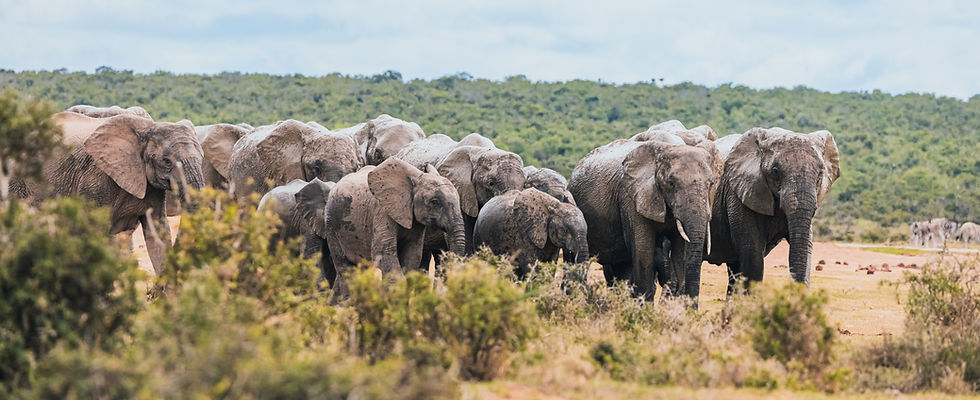
The Albanu x Silotron collaboration leverages advanced technologies, including real-time geo-fencing and LoRaWAN trackers, to address the pressing challenge of human-animal conflict, particularly in regions where communities and wildlife coexist in close proximity. This innovative approach aims to create safer environments for both humans and animals while fostering harmony between them.
How It Works
Using cutting-edge LoRaWAN trackers attached to elephants, Albanu x Silotron enables precise and continuous monitoring of animal movements. These trackers are lightweight, non-invasive, and capable of transmitting real-time location data to strategically placed gateways, even in remote areas with limited connectivity. The data feeds into a geo-fencing system, creating virtual boundaries around human settlements and agricultural lands.
Community-Centered Implementation
-
Village-Based Gateways
Gateways equipped with advanced communication capabilities are installed in villages within regions prone to human-elephant conflict. These gateways act as the primary receivers of tracking data and form the backbone of the alert system. -
Multi-Layered Geo-Fences
Geo-fences are established around each village in concentric circles, with critical distance thresholds defined at 15 km, 10 km, and 5 km. This layered approach provides escalating alerts, enabling a proactive response to mitigate risks.
Alert and Intervention System
-
15 km Boundary: Early Warning
When an elephant herd is detected within 15 km of a village, the gateway triggers an initial alert. This notification allows the community to prepare and activates an early warning system to prevent panic. -
10 km Boundary: Audible Alarm
At the 10 km mark, an audible alarm is activated, alerting residents of the herd’s proximity. This step is crucial for ensuring the safety of villagers, especially during the night or when visibility is low. -
5 km Boundary: Intervention and Chili Bomb Deployment
If the herd advances to within 5 km of the village, intervention units are dispatched to gently redirect the elephants. In cases where conventional methods are insufficient, the team employs an innovative and humane deterrent: chili bombs. These bombs, made by mixing elephant dung and ground chili, are lit to release a pungent, non-harmful smoke that deters elephants without causing harm. The smell, highly unpleasant to elephants, naturally encourages them to retreat.
Benefits for Communities and Conservation
-
Reducing Human-Animal Conflict
By providing advance notice of elephant movements, communities can secure their homes, crops, and families, significantly reducing the risk of property damage and injury. -
Empowering Local Communities
Villagers are engaged as active participants in the system, from helping to install gateways to coordinating responses. This fosters a sense of ownership and strengthens the bond between conservation efforts and local livelihoods. -
Protecting Elephants
The system ensures that interventions prioritize non-violent methods, safeguarding the well-being of the elephants while preventing them from venturing into dangerous situations.
A Broader Impact
The Albanu x Silotron initiative showcases the potential of technology to address one of the most challenging aspects of wildlife conservation—balancing human needs with the protection of endangered species. The deployment of real-time geo-fencing systems not only saves lives but also serves as a model for sustainable coexistence between communities and wildlife.
Through this partnership, Albanu x Silotron is taking a bold step toward creating a future where human-animal conflicts are minimized, ecosystems are preserved, and both communities and wildlife can thrive together. By leveraging innovation, collaboration, and community empowerment, they are transforming conservation into a shared and actionable responsibility.


